
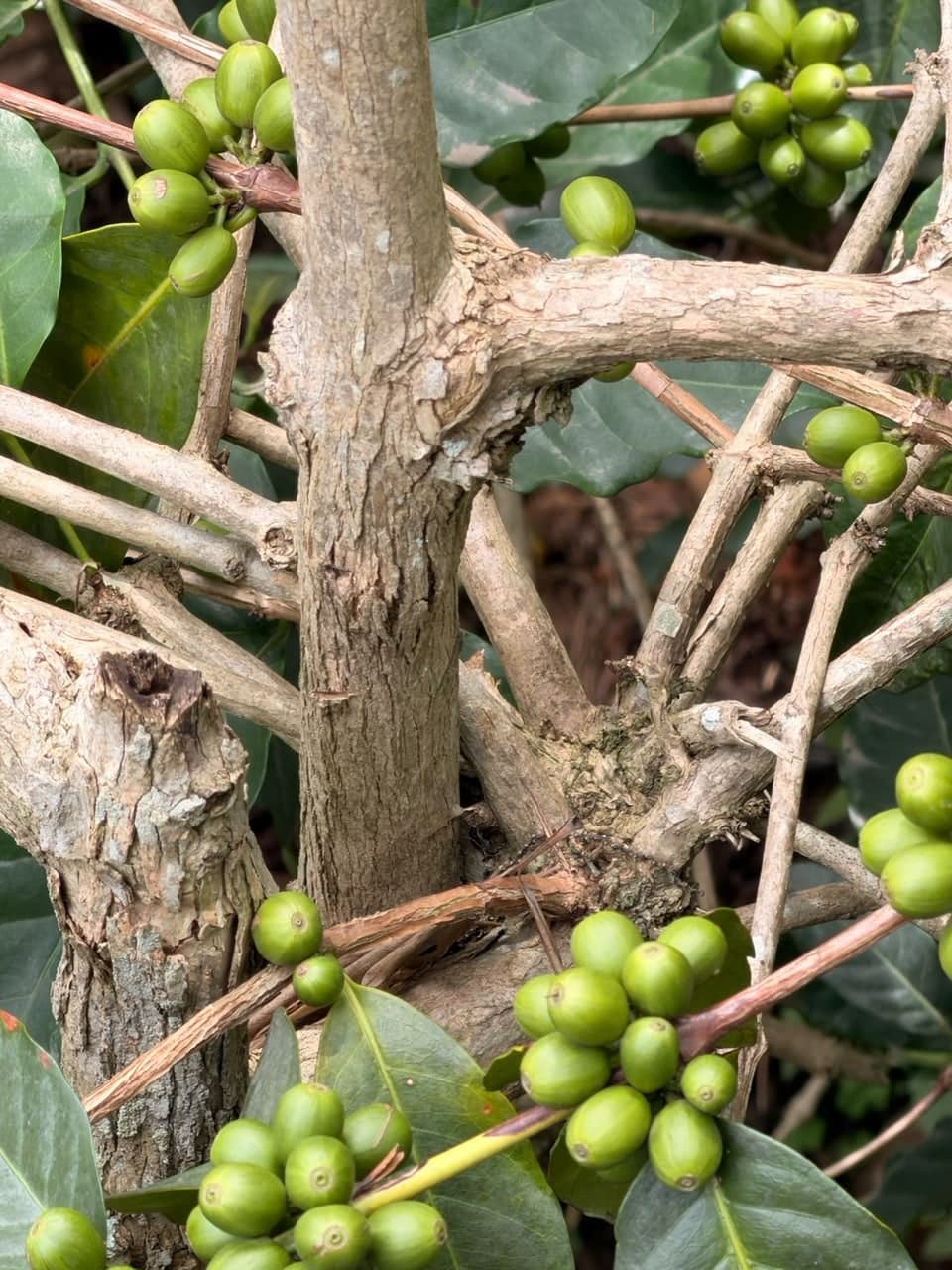
Processing
How the coffee is made.
What happens between the cherry and the green bean changes the cup more than the screen size does. Here is what we run, what it does, and when it can be made.
Processing methods
Washed
Fully de-mucilaged, then dried to trade moisture standard. The fruit comes off the bean before drying starts. In the Indian trade this is Plantation for Arabica and Parchment for Robusta.
- In the cup
- Clean and bright. Acidity is easier to read because there is no fruit sitting on top of it.
- Availability
- Across both species, year round.
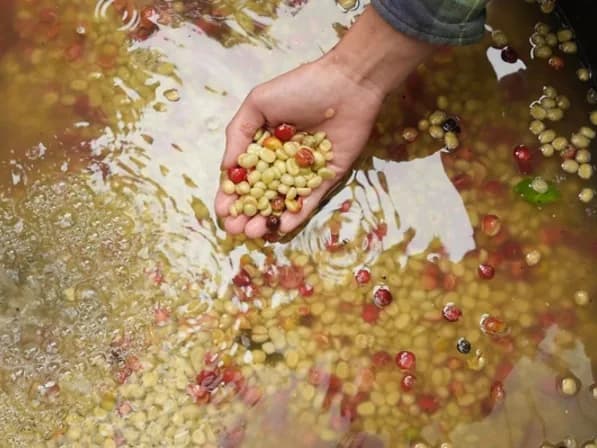
Unwashed / natural
Dried as whole cherry, with the fruit left on the bean the whole way through. Called Cherry here, for both Arabica and Robusta.
- In the cup
- Heavier body and a fruit-forward cup, with lower acidity than a washed lot off the same estate.
- Availability
- Across both species, year round.
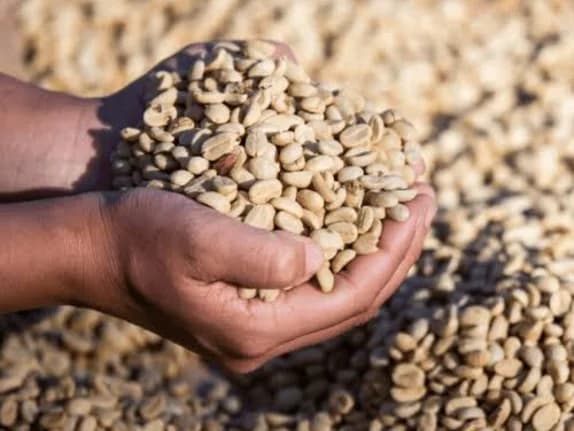
Honey processed
Pulped, but with the mucilage retained through drying. How much stays on is what separates one honey from the next, and it runs as a spectrum rather than a switch.
- In the cup
- Sweetness and body scale with the mucilage left on.
- Availability
- To order. Ask before you plan a release around it.
Yellow / white honey
Minimal mucilage retained. Lighter and cleaner.
Red honey
Moderate retention. Balanced sweetness and body.
Black honey
Maximum retention, slow-dried. The heaviest body and the most sweetness of the three.
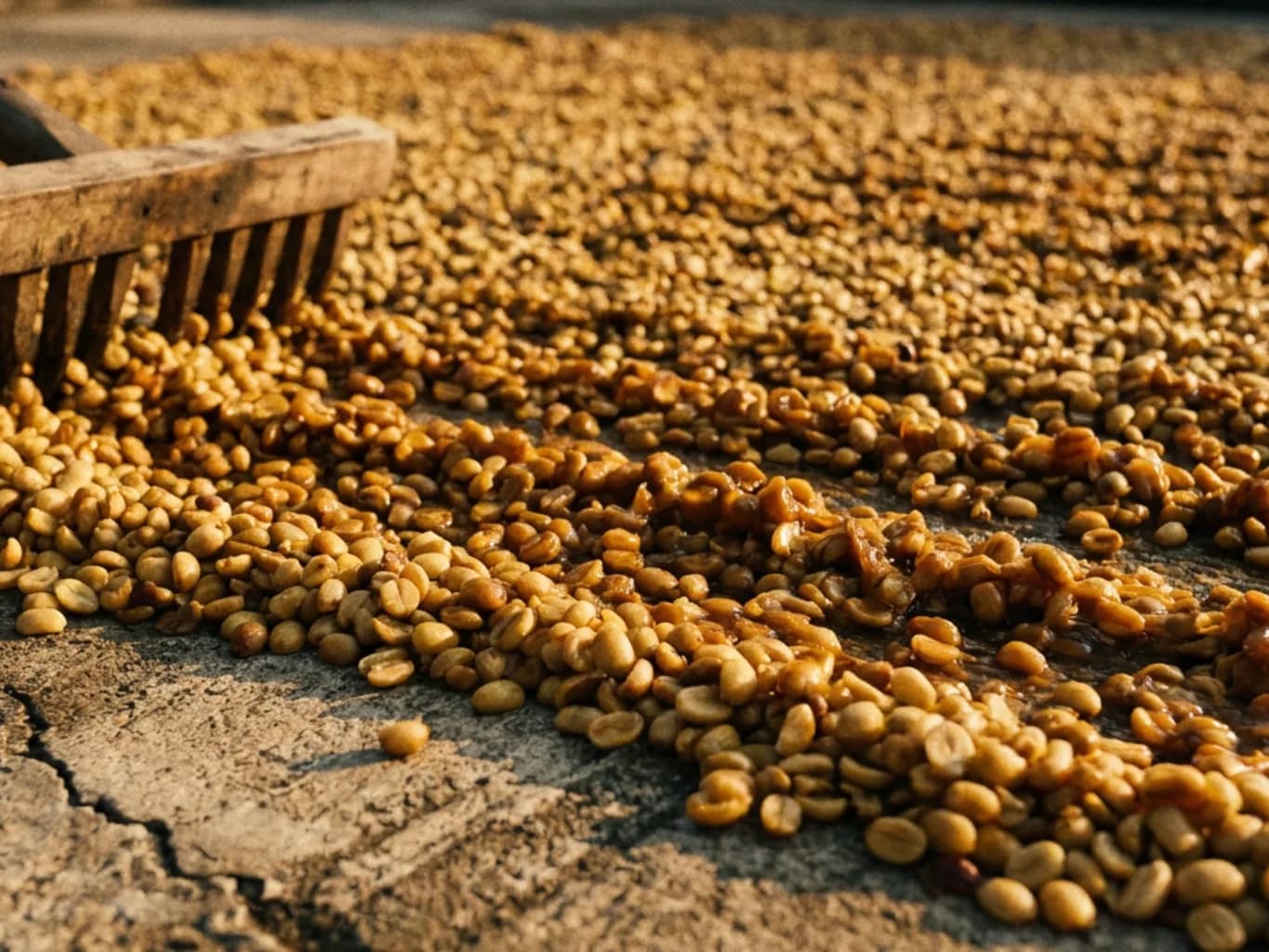
Monsooned
Dried coffee is moved into open warehouses on the Malabar coast and left exposed to the monsoon. The beans take up moisture, swell, and fade to a pale gold. No other origin can make it, because no other origin has that monsoon.
- In the cup
- Earthy and heavy, with the acidity almost entirely gone.
- Availability
- Monsoon Malabar, from the June-to-September monsoon.
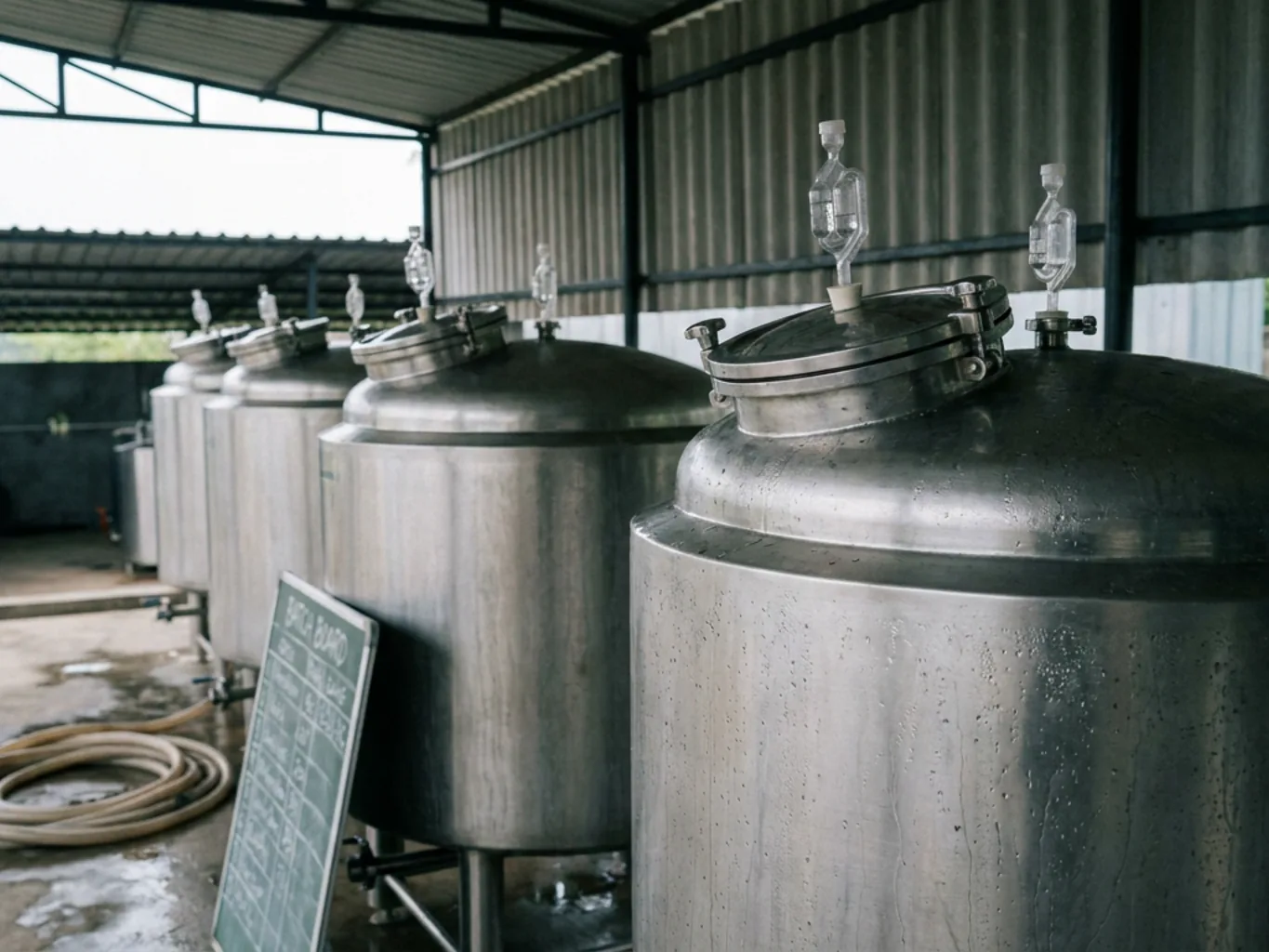
Fermentation
Three ways to ferment, two windows to do it in
A cherry-stage ferment needs fresh cherry, so it is tied to the harvest. A parchment-stage one runs off dried stock and can be scheduled. Knowing which is which is the difference between a launch date that holds and one that does not.
- Aerobic
- Open-air fermentation, for the classic flavour development typical of the region the lot came from.
- Standard across the range.
- Anaerobic
- Sealed-tank fermentation, for enhanced fruit and sweetness.
- To order, in the harvest window.
- Co-fermentation
- Region-based and fully customised co-ferments, built to a buyer's flavour brief. We run these both aerobically and anaerobically.
- Small batch, to order. See the windows below.
Cherry-stage ferments
October / November through February
These need fresh cherry, so they are tied to India's main harvest and batched inside that window. Order outside it and the run waits for the crop.
- Wine Mosto
- Cacao Nib
- Amarena Cherry
- Blackberry + wine yeast
Parchment and infusion-stage ferments
Year round
These run off already-processed dried stock, so they can be scheduled far more flexibly through the year.
- Barrel-aged
- Bergamot
- Saffron
- Rose
- Yuzu
Every co-ferment is small batch and made to order. Figure roughly four to six weeks from order to a finished, rested lot once a run starts. We run a handful of focused cycles a year rather than high-volume batching, so quality stays tight.
Processing
Planning a release around a specific process?
Tell us the process and the month. We will tell you whether it can be made, and when the run would finish.
- info@soraexports.com
- Phone
- +91 9327332905
- Loading ports
- Nhava Sheva (JNPT) · Mundra