
Quality
Every lot, checked by hand.
Four checks, on every shipment, against the specification agreed with you rather than a house standard you never saw.
The four checks every lot passes
01 — Screening
01
Screening
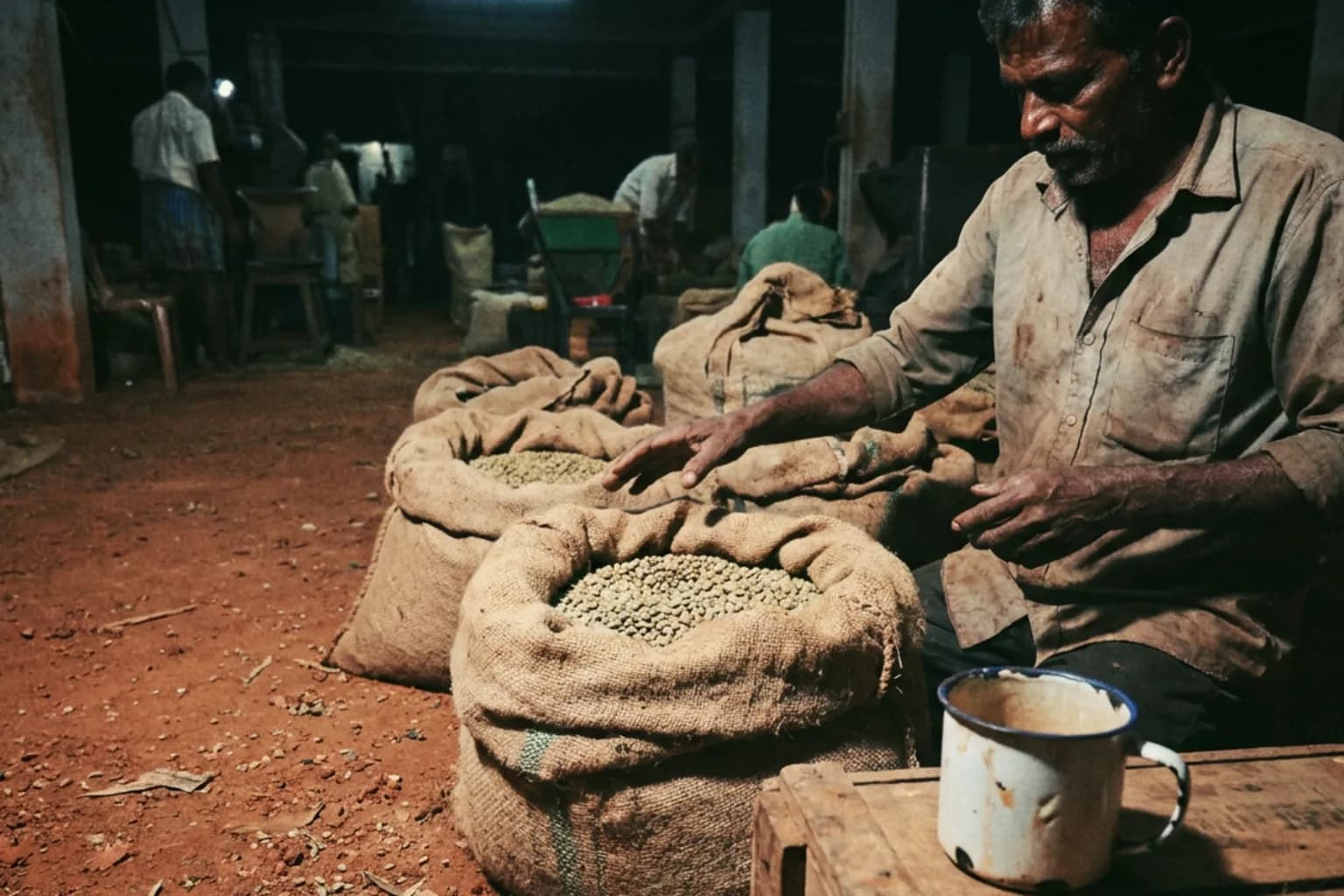
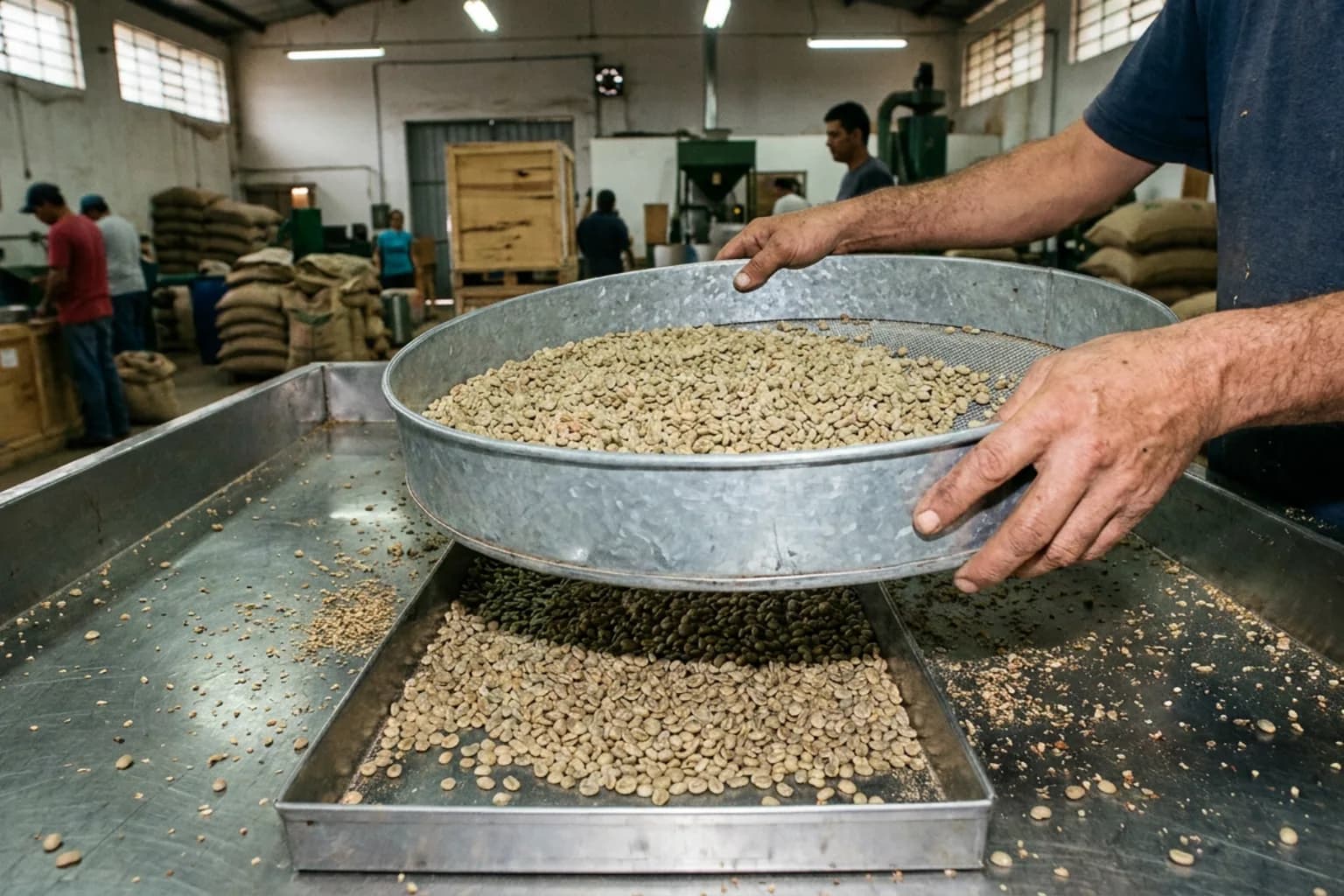
Every lot is screened before export so bean size and cleanliness match the specification agreed with the buyer. Grades separate on the round-hole sieve the beans are retained on — the millimetre figure is the sieve, and the screen number is the same figure in 64ths of an inch.
What you receive
The retention and sieve figures on the grading certificate.02
Cupping
Lots are cupped against the grade and against the profile agreed with you. If the cup does not match what was agreed, the lot does not ship — which is the only version of this claim worth making.
What you receive
Cupping notes against the agreed profile, on request.03
Grading
Lot-by-lot grading against export standards, with defect tolerances stated per grade rather than averaged across the range. The tolerance is published on every lot page, including where it is wide.
What you receive
The grading certificate issued by our curing works.04
Food-grade compliance
FSSAI licensing for food-grade export, with APEDA and Coffee Board of India registration behind every consignment. Each of those is a number you can check against the register that issued it.
What you receive
Licence and registration numbers, published on the certificates page.
How a grade is decided
Sieve, not adjective
A grade is a measurement. Beans are passed over round-hole sieves and the grade is the sieve they are retained on, at a stated minimum percentage by weight. Everything else on a lot page follows from that one number.
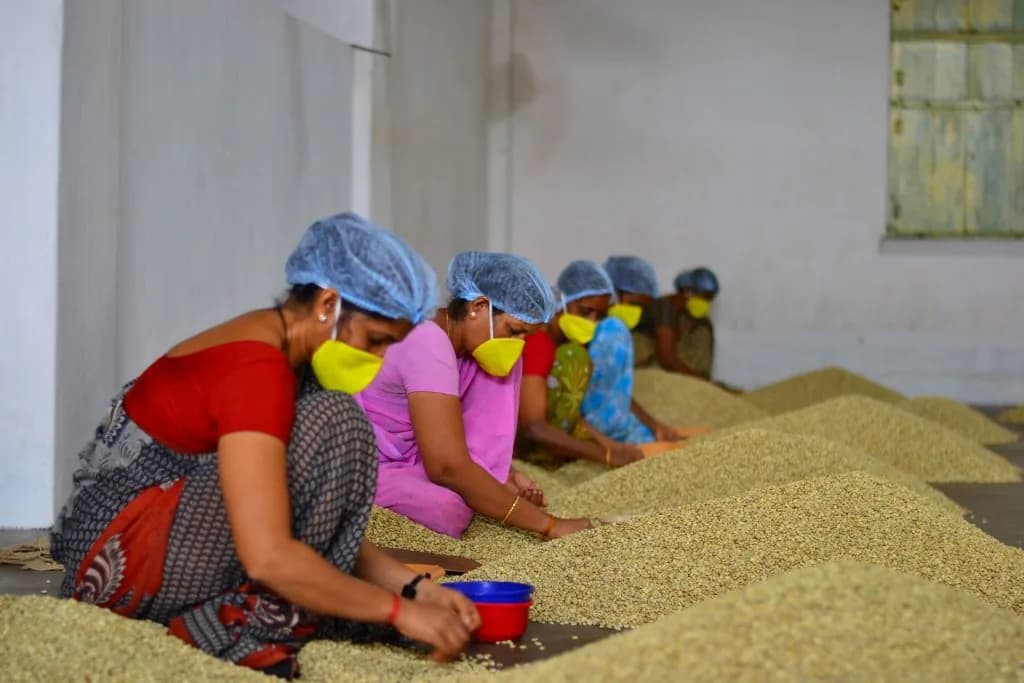
Screening bean sizes by hand, counting defects against Coffee Board of India and ICO standards, reading moisture and cupping reports — this is the work the company was built out of, and it is still where a lot is accepted or turned down.
See the graded catalogue| Sieve | Screen | Grades |
|---|---|---|
| 7.50 mm | Screen 19 | AAA |
| 7.10 mm | Screen 18 | AA |
| 6.65 mm | Screen 17 | A |
| 6.00 mm | Screen 15 | AB, B |
| 5.50 mm | Screen 14 | C |
| 5.00 mm | Screen 13 | BBB |
Compliance
Registered, and checkable at source
Every credential below is a registration held with a named authority, each of which maintains a public register you are welcome to search.
- FSSAI licence
- Food Safety and Standards Authority of India
- APEDA registration
- Agricultural and Processed Food Products Export Development Authority
- Coffee Board of India
- Coffee Board of India, Ministry of Commerce and Industry
- Importer Exporter Code
- Directorate General of Foreign Trade
- GST registration
- Goods and Services Tax Network
Registration and licence numbers are supplied on request, and with every consignment's document set. Each authority above maintains a public register you are welcome to search.

Quality
Want the quality detail for a specific grade?
Tell us the grade and we will send the grading certificate, the retention figures and the defect tolerance for the current parcel.
- info@soraexports.com
- Phone
- +91 9327332905
- Loading ports
- Nhava Sheva (JNPT) · Mundra